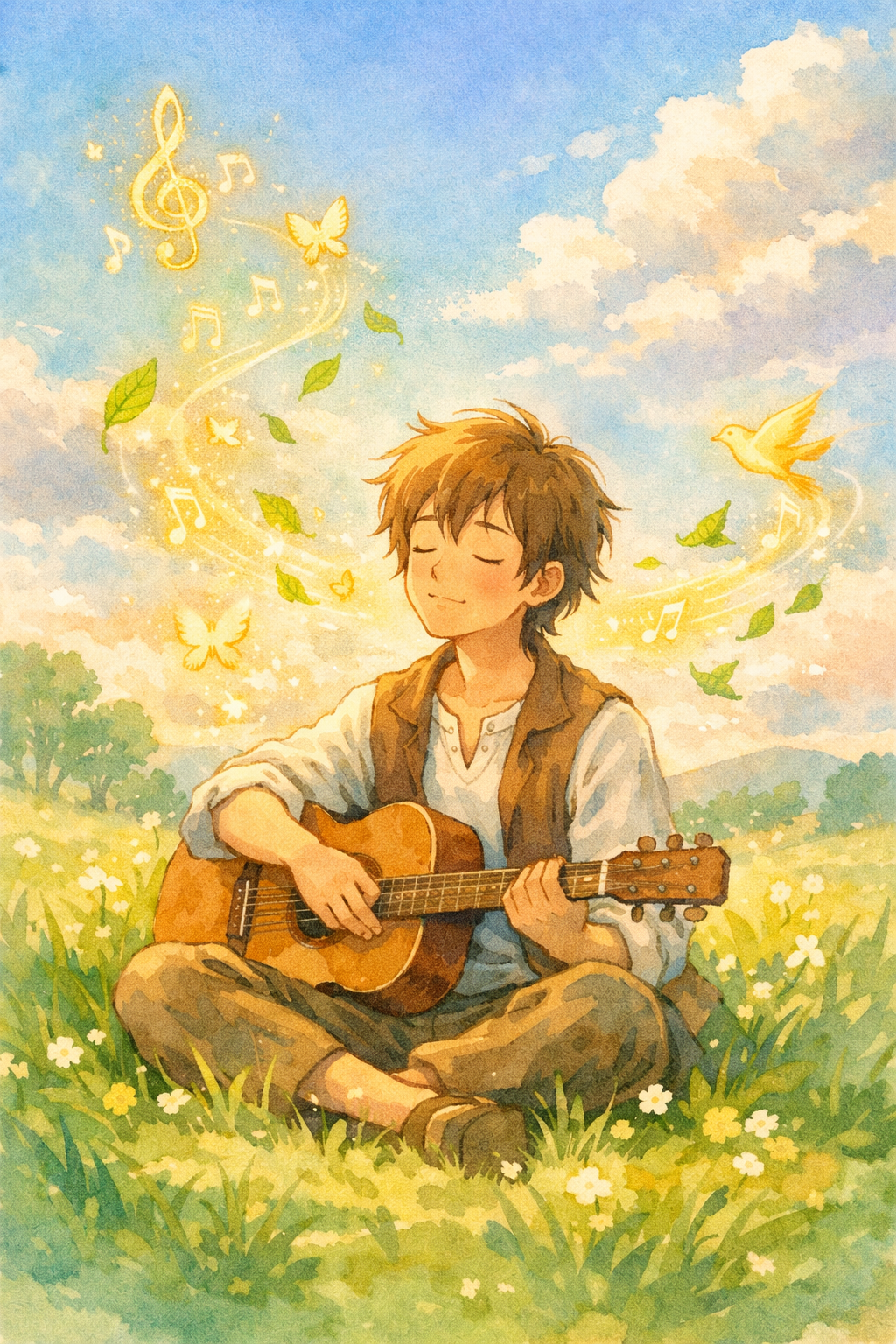
Have you ever watched a musician pick up a song after hearing it just once? That's the power of playing by ear—and science shows it might be the most natural way to learn music.
What Does "Playing By Ear" Really Mean?
Playing by ear is the ability to reproduce music by listening, without relying on written notation. It's how humans learned music for thousands of years before sheet music existed, and it remains the primary method in jazz, blues, rock, folk, and popular music traditions worldwide.
The Research: Ear Training vs. Sheet Music
A groundbreaking study published in PMC examined brain activation patterns in musicians who learned primarily by ear versus those who relied on sheet music. The findings were striking: "When it comes to catching phrasal structures, the ear is mightier than the sheet music."
The researchers found that phrasal structures in music are processed similarly to language when learned aurally—suggesting our brains are naturally wired to understand music through listening.
The Five Skills Study
Perhaps the most compelling evidence comes from research by Woody (cited in multiple ear training studies), which examined five core musical skills:
- Improvising
- Performing rehearsed music
- Playing by ear
- Playing from memory
- Sight-reading
The remarkable finding? Playing by ear was the only skill that contributed to improvement in all four other skills. In other words, developing your ear makes you better at everything else.
Why Ear-Based Learning Works
1. It Mirrors Natural Language Acquisition
Think about how children learn to speak. They don't start with grammar books—they listen, imitate, and gradually build understanding. Music learning follows the same pattern when taught aurally.
Professor Lucy Green's research on informal music learning found that popular musicians who learned primarily by ear developed what she called "very good ears"—superior aural skills that transferred across all aspects of their musicianship.
2. It Develops Musical Intelligence, Not Just Mechanical Skill
According to multiple studies, playing by ear is associated with higher levels of creativity and musical intelligence. When you learn by ear, you're not just reproducing notes—you're understanding musical relationships, patterns, and structures.
3. It's How Most Music Is Actually Made
Here's something classical training often misses: most musical traditions worldwide are aural, not written.
As documented in music education research:
- Jazz musicians in the bebop era learned by "piling into clubs and listening to each other play, picking things up on the bandstand"
- Rock, blues, folk, and popular musicians rarely use sheet music on stage
- Even when notation exists, it's typically transcribed from recordings, not the other way around
The Western Classical Exception
It's important to acknowledge that Western classical music does have a "written tradition" where composers create sheet music that performers then interpret. For this specific genre, reading notation is essential.
However, even classical musicians benefit from ear training. The best performers don't just read notes—they understand the music deeply enough to make interpretive choices.
Professional Musicians Still Practice Ear Skills
A 2024 study analyzing how professional musicians learn songs found three primary reasons they continue to practice playing by ear:
- Speed and ease of learning - It's simply faster to learn a song by listening than by deciphering notation
- Flexibility while improvising - Strong ears enable real-time musical decisions
- Working around notation limitations - Western notation can't capture everything (groove, feel, microtiming)
How to Develop Your Ear
The good news? Playing by ear is a skill that can be developed at any age. Here's how to start:
Start With Intervals
Learn to recognize the distance between two notes. This is the foundation of melodic hearing.
Practice Active Listening
Don't just hear music—listen. Try to identify instruments, chord progressions, and melodic patterns.
Use Technology Wisely
Modern apps can provide structured ear training exercises that accelerate learning.
Train Your Ear Today
Ready to develop your musical ear? ChordLingo's Daily Pitch Challenge is a free, fun way to test and improve your pitch recognition skills in just 2 minutes a day.
Try Free Now →References
- Brain activation patterns study - PMC Article on Ear vs. Sheet Music Learning
- Woody, R. H. - Research on the five musical skills (cited in multiple ear training studies)
- Green, L. - Research on informal learning practices of popular musicians
- Lilliestam, L. (1996) - On playing by ear, Popular Music
- University of Waterloo study on YouTube ear training - arXiv Research
- The transformative power of music - PMC Neuroplasticity Study